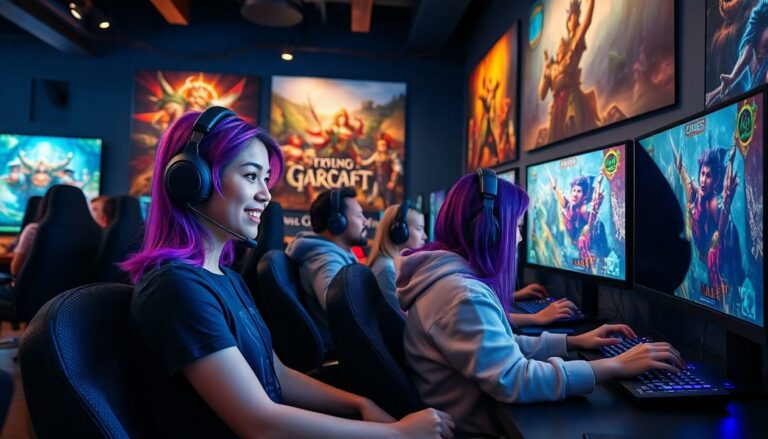


The term “true gaming” gets thrown around in Discord servers, Reddit threads, and Twitch chats like it’s some kind of sacred badge. But what does it actually mean? In 2026, the gaming landscape has never been more diverse, from competitive esports arenas packed with fans to mobile players grinding ranked matches on their lunch breaks. The definition of what makes someone a “real gamer” has evolved far beyond the stereotypes of the past.
This isn’t about gatekeeping or claiming one platform is superior to another. True gaming is a mindset, a culture, and a way of engaging with the medium that goes deeper than just picking up a controller or clicking “play.” It’s about passion, respect for the craft, and a genuine love for the experience, whether you’re speedrunning Elden Ring on NG+7, theory-crafting builds in Path of Exile 2, or mastering frame-perfect combos in Street Fighter 6.
Key Takeaways
- True gaming is defined by passion, respect for the craft, and deep engagement rather than rank, K/D ratio, or expensive gear.
- True gamers actively pursue mastery through deliberate practice, replay analysis, and skill development across all platforms—PC, console, and mobile.
- True gaming culture prioritizes sportsmanship, fair play, and community respect, rejecting toxic behaviors like cheating, smurfing, and harassment.
- The true gaming mindset embraces learning, adaptation, and appreciation for game design, from understanding frame data in fighting games to analyzing narrative choices in story-driven titles.
- True gaming is inclusive and accessible to anyone with genuine passion and willingness to engage deeply, with no gatekeeping or elitism involved.
- Emerging technologies like VR, cloud gaming, and AI-driven NPCs continue to expand the true gaming landscape while fostering more diverse and welcoming communities.
What Does True Gaming Actually Mean?
True gaming isn’t defined by your K/D ratio, your rank, or how many platinum trophies sit on your profile. It’s a philosophy, a way of approaching games that values the experience itself over external validation.
The Philosophy Behind True Gaming
At its core, true gaming is about engagement. It’s the difference between passively consuming content and actively participating in a craft. True gamers don’t just play games: they study mechanics, appreciate design choices, and seek to understand what makes a title tick. They’ll spend hours in training mode perfecting a cancel combo not because it’s required to win, but because the pursuit of mastery is rewarding in itself.
This philosophy extends beyond individual skill. True gamers respect the medium’s history, they understand why Super Metroid’s map design was revolutionary, why Half-Life changed FPS storytelling, and why Dark Souls redefined difficulty curves. They see games as art, systems, and stories worth preserving.
How True Gaming Differs from Casual Play
Casual play isn’t inferior, it’s just different. A casual player might boot up Stardew Valley to unwind after work, focusing purely on relaxation. A true gamer playing the same title might optimize crop rotations for maximum profit-per-season, min-max relationships to unlock all cutscenes before Year 2, and study speedrun routes for the Community Center completion.
The distinction isn’t about time invested, either. You can be a true gamer with only 10 hours a week if those hours are spent with intention and passion. What separates the mindsets is depth of engagement, the willingness to dig beneath the surface, to learn, and to respect the craft. Casual players play for fun (which is great). True gamers find their fun in understanding and mastery.
The Core Principles of True Gaming
What binds true gamers together across genres, platforms, and playstyles? A set of shared principles that define how they approach the hobby.
Passion Over Performance
True gaming isn’t about being the best, it’s about loving the process. You don’t need to hit Radiant in Valorant or conqueror in PUBG Mobile to be a true gamer. What matters is that you care. Whether you’re grinding low elo to improve your fundamentals or replaying The Witcher 3 for the fourth time to catch dialogue you missed, passion is the driving force.
This principle protects against burnout. When performance becomes the only metric, gaming turns into a job. True gamers remember why they started: because games are incredible, immersive, challenging, and rewarding experiences.
Respecting the Craft and the Community
True gamers recognize that every game represents thousands of hours of labor, artists, writers, designers, programmers, and testers pouring their expertise into a single experience. Even when a game misses the mark, there’s respect for the attempt.
This respect extends to fellow players. Sportsmanship matters. True gamers don’t flame teammates in ranked lobbies, spam toxic emotes after kills, or review-bomb games over minor patch changes. They understand that gaming communities thrive when mutual respect is the norm, not the exception. Constructive criticism? Absolutely. Harassment and gatekeeping? That’s the opposite of what true gaming represents.
Lifelong Learning and Skill Development
The meta shifts. Balance patches drop. New mechanics get introduced. True gamers adapt. They watch patch notes like some people watch stock tickers, not out of obligation but curiosity. When League of Legends reworks a champion, true gamers lab out the new combos. When Call of Duty adjusts TTK values, they hit the firing range to retrain muscle memory.
This commitment to growth isn’t limited to competitive titles. A true gamer playing Baldur’s Gate 3 will experiment with multiclass builds, test dialogue trees, and explore every corner of the Sword Coast not because a quest marker told them to, but because discovery itself is the reward.
The Evolution of True Gaming Culture
True gaming culture didn’t appear overnight. It evolved alongside the medium itself, shaped by decades of innovation, competition, and community building.
From Arcade Legends to Modern Esports
In the ’80s and ’90s, true gamers gathered in arcades, feeding quarters into machines to chase high scores. Names like Billy Mitchell and Steve Wiebe became legends not through sponsorships or streaming deals, but through pure, relentless dedication to mastery. The culture was hyper-local, your reputation was built face-to-face, cabinet-to-cabinet.
The rise of competitive gaming transformed that model. By the time StarCraft: Brood War became a cultural phenomenon in South Korea during the early 2000s, esports had begun to formalize. The spirit remained the same, dedication, respect, mastery, but the scale exploded. Modern esports in 2026 feature multi-million dollar prize pools, franchised leagues, and players who train like professional athletes. The venues discussed on PC gaming news sites host thousands of fans watching Dota 2 Internationals, Valorant Champions, and League of Legends Worlds.
Yet the core hasn’t changed. Whether you were grinding frame data in Street Fighter II at your local arcade or perfecting agent lineups in Valorant Episode 8, the mindset is identical.
How Streaming Changed the True Gaming Landscape
Twitch, YouTube Gaming, and Kick didn’t just create new careers, they democratized knowledge. In the past, learning advanced techniques required local mentors or obscure forum posts. Now, any player can watch pros dissect their gameplay, frame-by-frame.
Streaming also exposed the personalities behind the skill. True gamers like Shroud, s1mple, and Faker became household names not just for their mechanics but for their approach to the game, calm, analytical, always improving. Their streams became masterclasses in mindset as much as mechanics.
But streaming introduced challenges, too. The pressure to perform for an audience can warp priorities. Some streamers prioritize entertainment over improvement, which is fine, but it’s a different path. True gamers who stream manage to balance both, sharing their journey toward mastery while keeping the focus on the game itself.
Platforms Where True Gaming Thrives
Platform wars are tired. True gaming exists on PC, console, and mobile, each ecosystem has its champions, its challenges, and its unique culture.
PC Gaming: The Ultimate True Gamer’s Platform
PC gaming offers unmatched control: custom keybinds, frame rates uncapped by hardware limitations, mod support that extends a game’s lifespan by years. Titles like Counter-Strike 2, Dota 2, and StarCraft II have defined competitive gaming for decades, and they’ve all called PC home.
The platform demands investment, not just financial (though a solid rig helps), but intellectual. Optimizing settings for max FPS, troubleshooting driver conflicts, and tweaking configs are all part of the experience. True PC gamers treat their setups like instruments, constantly tuning for peak performance. Coverage on platforms like gaming culture outlets frequently highlights how deeply PC enthusiasts engage with their hardware and software ecosystems.
Console Gaming and the Competitive Scene
Consoles offer something PC can’t match: consistency. Every PS5 runs the same. Every Xbox Series X outputs identical performance. For competitive titles like Call of Duty, Halo Infinite, and Rocket League, this level playing field matters.
The console competitive scene has exploded in 2026, especially with Sony’s continued investment in tournament infrastructure and Microsoft’s push for cross-play integration. True console gamers have proven that skill transcends input method, players like Shotzzy and Scump have dominated FPS titles on controller, holding their own against any platform.
Mobile Gaming: Breaking Stereotypes
Mobile gaming has fought an uphill battle for legitimacy, but true gamers have always known: the platform doesn’t define the player. Titles like PUBG Mobile, Genshin Impact, Call of Duty Mobile, and League of Legends: Wild Rift offer depth, competitive ladders, and skill ceilings that rival their PC and console counterparts.
Pro mobile esports in regions like Southeast Asia and China have legitimized the platform beyond question. True mobile gamers display the same dedication, mastering HUD layouts, optimizing sensitivity for claw grip, and grinding ranked just as fiercely as anyone on PC. Dismissing mobile gaming in 2026 is simply out of touch.
Essential Traits Every True Gamer Shares
Even though differences in platform, genre preference, or skill level, true gamers share a common set of traits that define their approach to the hobby.
Dedication to Mastery
Mastery isn’t about being the best in the world, it’s about being better than you were yesterday. True gamers set personal benchmarks and chase them relentlessly. Maybe that’s hitting Diamond for the first time, clearing a raid tier on Mythic difficulty, or finally landing that perfect parry sequence in Sekiro.
This dedication shows up in how true gamers practice. They don’t just queue matches mindlessly: they review replays, analyze mistakes, and deliberately work on weak points. A true gamer who struggles with anti-air in Street Fighter 6 will spend 30 minutes in training mode drilling the timing until it’s muscle memory.
Sportsmanship and Fair Play
Cheating, smurfing, exploiting, and griefing are antithetical to true gaming. These behaviors undermine the integrity of competition and poison communities. True gamers value fair play because they understand that the challenge itself is the point. A win earned through cheats is hollow: a loss that teaches you something is valuable.
This extends to how true gamers treat opponents and teammates. GG after a close match. Helping newer players learn mechanics instead of flaming. Reporting actual toxicity instead of ignoring it. These small actions build the kind of communities where true gaming thrives.
Appreciation for Game Design and Storytelling
True gamers don’t just consume games, they appreciate them. They notice when a level designer uses subtle lighting to guide player movement. They recognize the brilliance of Celeste‘s assist mode, making difficulty accessible without compromising challenge for those who want it. They admire narrative risks like The Last of Us Part II‘s dual-protagonist structure, even if the story didn’t land for them personally.
This appreciation often leads true gamers into adjacent hobbies: reading dev blogs, watching GDC talks, studying speedrun routing, or even dabbling in game development themselves. The passion extends beyond playing into understanding how and why games work the way they do. Resources like video game reviews and analysis often fuel this deeper understanding by breaking down design choices and narrative techniques.
How to Embrace the True Gaming Mindset
True gaming isn’t something you’re born into, it’s a mindset you cultivate. Here’s how to develop it, regardless of where you’re starting from.
Finding Your Gaming Niche
True gaming doesn’t require you to be good at everything. Find what resonates. Maybe you’re a tactics savant who thrives in XCOM 2 and Fire Emblem. Maybe you live for precision aiming in tactical shooters. Maybe narrative-driven RPGs like Disco Elysium and Baldur’s Gate 3 are where you find flow.
Once you find your niche, dive deep. Join communities, study high-level play, and engage with content creators who specialize in that space. A true gamer focused on fighting games will frequent Dustloop, study frame data, and watch tournament VODs. Specialization breeds mastery, and mastery fuels passion.
Building Skills Through Practice and Analysis
Raw playtime isn’t enough. Deliberate practice separates improvement from stagnation. Set specific goals for each session. Struggling with spray control in CS2? Spend 20 minutes daily on recoil maps. Want to improve macro in Age of Empires IV? Watch pro replays and note their build orders and timings.
Record your gameplay. It’s painful to watch yourself make mistakes, but it’s the fastest way to improve. Identify patterns, do you panic and miss shots under pressure? Do you forget to ward before objectives? Address weaknesses systematically, and improvement becomes inevitable.
Connecting with Like-Minded Gamers
True gaming is better shared. Find your people, whether that’s a competitive team, a guild, a Discord server, or even just a regular duo partner. Surrounding yourself with others who share the mindset accelerates growth and deepens enjoyment.
These connections also provide accountability. It’s easier to grind ranked when your squad is counting on you. It’s more fun to theory-craft builds when you can test them with friends. True gaming communities lift each other up, share knowledge freely, and celebrate each other’s wins.
Common Misconceptions About True Gaming
The term “true gamer” carries baggage. Let’s dismantle some of the myths that have unfairly shaped perceptions.
You Don’t Need Expensive Gear to Be a True Gamer
A $3,000 gaming PC, a pro-grade headset, and a custom mechanical keyboard don’t make you a true gamer. They might improve your experience, but the mindset comes first. Some of the most dedicated players grind on budget builds, older consoles, or mid-range smartphones.
Gear matters for competitive optimization at the highest levels, sure, but the difference between 60Hz and 144Hz won’t fix poor positioning or game sense. True gamers make the most of what they have and upgrade when it makes sense, not because they think expensive peripherals will shortcut the learning process.
True Gaming Isn’t About Gatekeeping
This is critical: true gaming is inclusive, not exclusive. It’s not about quizzing someone on obscure lore or mocking them for playing on easy mode. It’s not about declaring certain games or genres “not real gaming.” That gatekeeping nonsense has no place here.
Anyone can become a true gamer. All it requires is genuine passion, respect for the medium, and a willingness to engage deeply. A newcomer who plays Hades on God Mode and studies enemy patterns to improve is more of a true gamer than a veteran who smugly brags about beating Dark Souls while harassing others for struggling.
True gaming celebrates growth, diversity of experience, and the endless ways to love this medium.
The Future of True Gaming in 2026 and Beyond
The landscape keeps evolving, and true gamers evolve with it. Here’s where the culture is heading.
Emerging Technologies Shaping the Experience
VR and AR are no longer novelties, they’re legitimate platforms. Games like Half-Life: Alyx proved VR can deliver AAA experiences, and titles like Resident Evil 4 VR and Beat Saber continue pushing the medium. True gamers have embraced VR not as a gimmick but as another avenue for mastery and immersion.
Cloud gaming via services like Xbox Game Pass Ultimate and GeForce NOW is lowering barriers to entry, letting players access high-end titles without high-end hardware. While latency remains a concern for competitive play, the technology improves monthly. True gamers experiment with these platforms, understanding both their potential and current limitations.
AI-driven NPCs and procedural generation are creating more dynamic, replayable experiences. Games like No Man’s Sky (post-redemption arc) and emergent titles using advanced AI show how technology can enhance, not replace, thoughtful game design.
The Growing Inclusivity of Gaming Communities
Gaming in 2026 is more accessible than ever. Adaptive controllers, colorblind modes, scalable difficulty, and expanded language support mean more people can participate. True gamers recognize this as a win, more players means richer communities, more perspectives, and a healthier ecosystem.
The culture is also shedding its toxic past. While pockets of harassment still exist, the broader community increasingly rejects that behavior. Platforms enforce stricter moderation, tournaments highlight inclusive values, and content creators model positive engagement. True gaming has always been about respect, the community is finally catching up to that ideal.
Representation is improving, too. More games feature diverse protagonists, stories, and perspectives. True gamers appreciate this not as “politics” but as richer storytelling, because games are better when they reflect the full spectrum of human experience.
Conclusion
True gaming in 2026 isn’t defined by your platform, your rank, or your hardware. It’s a mindset rooted in passion, respect, and the relentless pursuit of mastery and understanding. It’s appreciating games as art, systems, and communities worth investing in. It’s treating fellow players with sportsmanship and the medium with reverence.
Whether you’re grinding ranked, exploring open worlds, solving puzzles, or mastering frame data, you’re part of this culture if you approach it with intention and love. True gaming has no gatekeepers, only those who care enough to dig deeper, learn constantly, and share that passion with others.
The future is bright. Technology is expanding what’s possible, communities are becoming more inclusive, and the medium continues to mature into one of the most compelling art forms of our time. True gamers will be there every step of the way, controllers in hand, ready for the next challenge.